
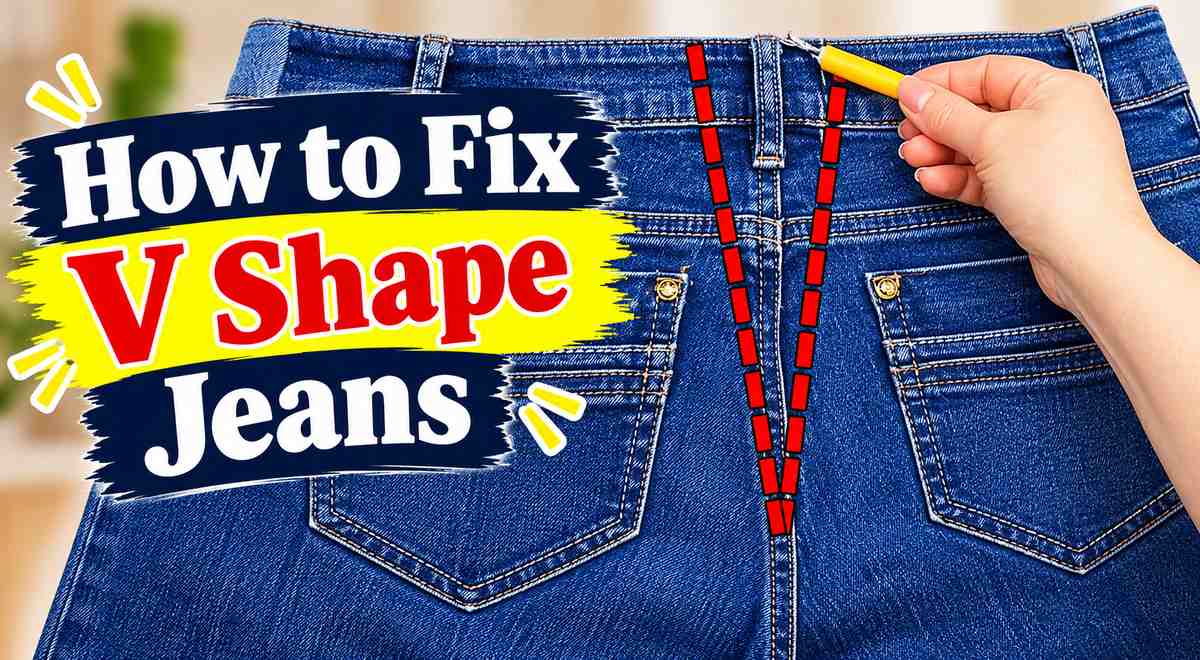
How to Fix V Shape Jeans: 3 Easy DIY Methods
If your jeans form a V-shaped wrinkle around the crotch, pull tightly at the front, or bunch up below the zipper, the problem may come from the rise, crotch curve, or fit through the hips and thighs. The right fix depends on where the fabric pulls and whether your jeans feel too tight or too loose.
The easiest way to fix the V shape in jeans is to identify the cause before changing the seams. You may need to adjust the crotch seam, remove excess fabric, or choose a better-fitting pair. Avoid cutting or sewing the crotch immediately, because the wrong adjustment can make the fit worse.
This guide explains how to fix V-shaped wrinkles in jeans at home, with beginner-friendly steps, practical sewing tips, and alternatives for jeans you do not want to alter permanently.
Quick Answer: How to Fix V Shape Jeans
Start by putting on your jeans and checking where the V-shaped lines appear.
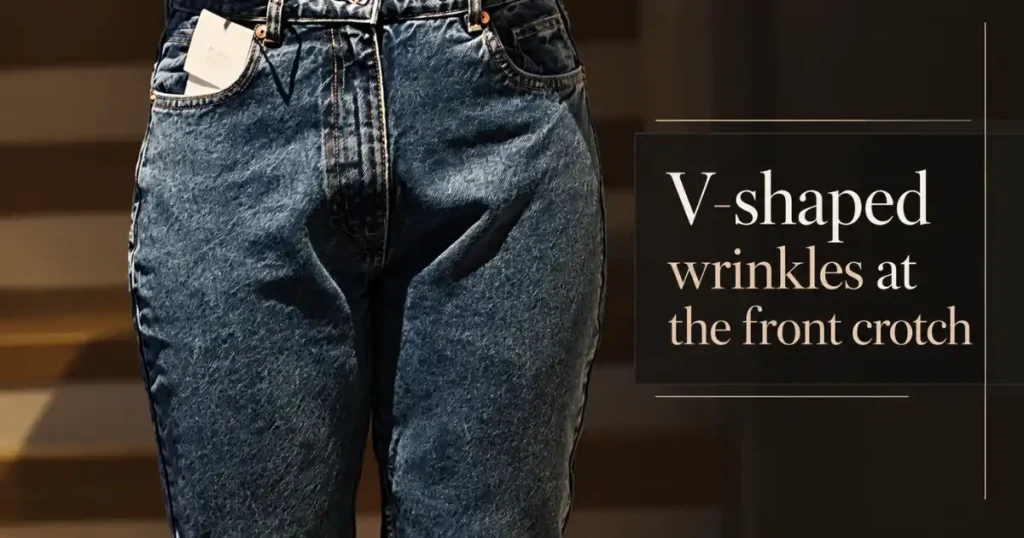
V-shaped wrinkles at the front crotch
The front rise may be too short, the crotch curve may be too shallow, or the upper thighs may be too tight. Check the fit before adding room to the seam.
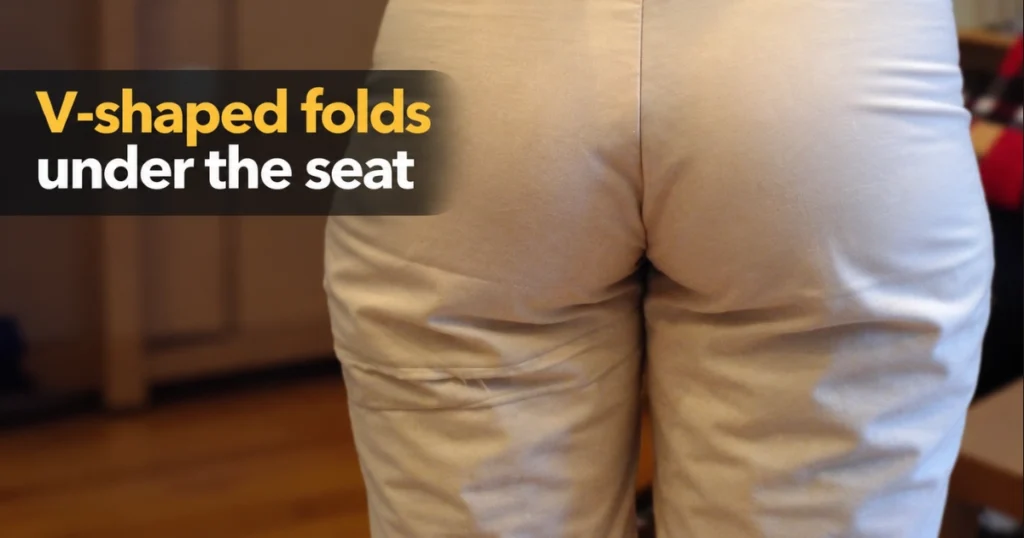
V-shaped folds under the seat
The back crotch curve or rise may be too long or too roomy. A small, targeted adjustment may help remove the excess fabric.
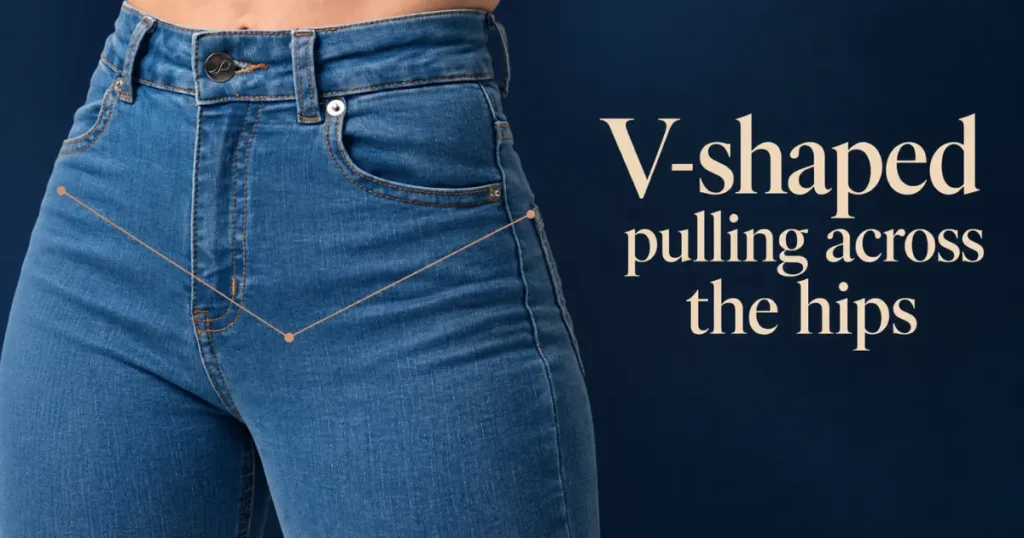
V-shaped pulling across the hips
The jeans may be too tight through the hips or thighs. Adjusting only the crotch seam will not solve a lack of room across the whole area.
These are possible causes, not guaranteed diagnoses. Check how the jeans feel when you stand, walk, and sit before choosing a repair.
Why Do My Jeans Make a V Shape?
A V shape can appear for several reasons. The direction of the wrinkles and the amount of extra fabric help you decide which adjustment to try.
| What you notice | Possible cause | Best first step |
|---|---|---|
| Diagonal lines pointing up from the front crotch | Short front rise or limited crotch room | Check for tightness and pulling |
| Loose fabric hanging below the front crotch | Too much length or excess fabric | Pinch the extra fabric to assess the fit |
| V-shaped folds below the back seat | Excess back crotch length or a mismatched curve | Check the back rise and seat fit |
| Horizontal pulling across the upper thighs | Insufficient thigh room | Assess the thigh seams and overall fit |
| Jeans feel fine standing but tight when sitting | Insufficient rise or seat room | Check the back rise and crotch curve |
| The V appears only when the jeans are very tight | Close fit or a mismatch between the cut and your body | Consider a roomier cut or a targeted alteration |
The crotch curve is the curved seam that joins the front and back of the jeans. The rise is the distance from the crotch area to the waistband. Both affect how the jeans sit on your body, so one problem can look similar to another.
Tools and Materials You May Need
You do not need every item for each repair. Start with the basic tools and add sewing supplies only if you decide to alter the seams.
- Essential: Full-length mirror, fabric-safe marking chalk or pencil, measuring tape, and straight pins or sewing clips.
- For sewing: Matching denim thread, a hand-sewing needle suitable for denim, or a sewing machine with a suitable denim needle.
- For seam adjustments: Seam ripper, fabric scissors, and an iron.
- Optional: A second person to help check the back fit and mark the fabric.
Use thread that blends with your jeans when you want the repair to be less noticeable. Choose a needle appropriate for the denim’s thickness and stretch content. If your jeans contain elastane, avoid pulling the fabric while stitching.
Method 1: Fix the V Shape by Adjusting the Crotch Seam
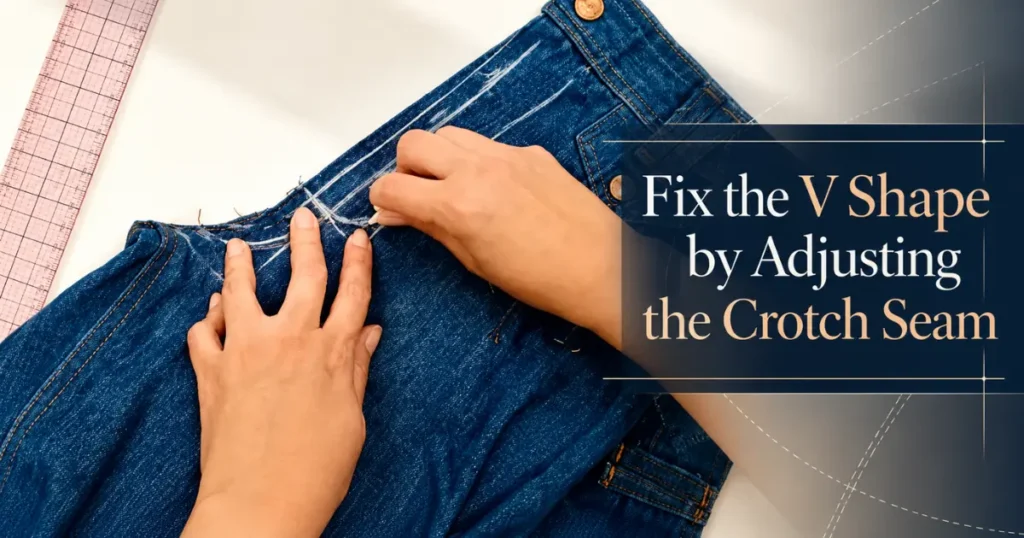
This method is suitable when the V-shaped wrinkles come from excess fabric near the crotch and the jeans otherwise fit well. It can also help when a small seam adjustment would improve the shape.
However, do not take in the seam if the fabric is already pulling tightly. That may reduce the available room and make the problem worse.
Step 1: Inspect the jeans
Put the jeans on and check the front, back, and side views in a mirror.
Notice whether the V-shaped fabric is loose or stretched. If possible, sit down and stand up again to see whether the crotch feels comfortable.
Step 2: Pinch the excess fabric
Take off the jeans and turn them inside out. If the problem is excess fabric, gently pinch a small amount along the affected crotch seam.
Use clips or pins to hold the proposed adjustment. Keep the fabric smooth and avoid catching the opposite layer of denim.
Do not assume the center crotch seam is always the problem. If the fabric pulls toward the front thighs or the hips feel tight, the adjustment may need to involve another seam or more room overall.
Step 3: Check the proposed fit
Turn the jeans right side out and try them on carefully. Check whether the V-shaped folds have improved and whether the crotch still allows comfortable movement.
If the adjustment creates tightness, remove the pins and reassess. Do not proceed simply because the wrinkles look smaller while standing still.
Step 4: Mark the seam adjustment
Once you are satisfied with the pinned fit, mark the proposed stitching line on the inside of the jeans.
Keep the change small and taper it gradually into the existing seam. A sudden change in the seam line can create a bump or another set of wrinkles.
Step 5: Sew and finish the seam
Remove the original stitching only where needed, using a seam ripper. Avoid cutting the denim itself.
Sew along the marked line with a suitable denim needle and matching thread. Backstitch at the beginning and end to secure the seam. Trim excess seam allowance only after checking the fit, and finish the raw edges where necessary to reduce fraying.
Try the jeans on again before trimming any substantial amount of fabric.
Expected result: A targeted seam adjustment may reduce loose folds near the crotch. It cannot correct every rise, hip, or thigh fitting problem, and the original seam may be difficult to restore if you cut away too much fabric.
Method 2: Fix Tight V-Shaped Wrinkles at the Front

If your jeans form diagonal V-shaped lines that point upward from the front crotch, the fabric may be under tension. The front rise or crotch extension may not provide enough room, or the upper thighs may be too tight.
In this situation, making the crotch seam smaller is usually the wrong first move.
Step 1: Check where the pulling starts
Put on the jeans and look at the front crotch and upper thighs. Check whether the wrinkles point toward the crotch seam or spread across the thighs.
If the waistband, hips, and thighs also feel tight, consider whether the jeans are simply too small or too narrow for your preferred fit.
Step 2: Check the inside seam allowance
Turn the jeans inside out and inspect the crotch and inseam. Look for enough unused seam allowance to let out the seam.
Some jeans have very little extra fabric available. Heavy topstitching, flat-felled seams, and overlocked edges can also make this area harder to alter.
Step 3: Let out the seam only if there is room
If the fit problem is localized and the seam allowance permits it, carefully remove the stitching in the affected section. Re-sew closer to the raw edge to release a small amount of fabric.
Keep the new line smooth and gradual. Do not cut the seam allowance before testing the result.
If there is not enough fabric to release, a tailor may be able to assess whether a matching denim insert or a different alteration is possible. Such a repair may leave a visible seam or change the appearance of the jeans.
Step 4: Test movement
Try the jeans on and sit, walk, and bend your knees. The crotch should feel comfortable without pulling sharply against your body.
If the wrinkles remain, the issue may involve the rise shape or upper-thigh width rather than the seam allowance alone.
Expected result: Letting out a seam may provide limited extra room. It cannot create unlimited fabric, and it will not always correct a poorly matched crotch curve.
Method 3: Remove Excess Fabric Under the Crotch

If the V shape comes from loose fabric hanging below the crotch, you may need to shorten or reshape the affected area instead of letting it out.
This method requires more care because removing too much fabric can make the crotch uncomfortable.
- Identify the loose area: Put on the jeans and check where the fabric sags. Make sure the waistband is sitting at the height you normally wear it.
- Pinch the surplus fabric: With the jeans off and inside out, pin a small amount of excess fabric near the affected seam.
- Check the pinned fit: Try the jeans on again and make sure the crotch does not pull upward or feel tight.
- Mark a smooth stitching line: Taper the adjustment into the original seam instead of creating a sharp corner.
- Baste before final stitching: Basting means sewing temporary stitches that are easy to remove. Check the fit before making the final seam.
- Finish only after testing: Once the shape works, sew securely and finish the seam allowance without cutting away fabric unnecessarily.
A sagging front crotch and excess fabric under the back seat do not always need the same adjustment. Diagnose the front and back separately, since their curves serve different purposes.
Can You Fix V Shape Jeans Without Sewing?
Sometimes, yes. A no-sew option is worth trying if you only want to improve how the jeans sit or you are not ready to make a permanent alteration.

1. Adjust the waistband position
If the jeans are sitting lower or higher than intended, reposition them at the waist and check whether the wrinkles change. This can help diagnose a rise issue, but it will not fix a badly shaped crotch seam.

2. Try a different fit
If the V appears because the jeans are tight through the hips or thighs, a different size, rise, or cut may work better than altering the crotch.

3. Follow the care label
If the denim has stretch, follow the garment’s washing and drying instructions. Avoid using excessive heat to try to reshape the crotch because it will not reliably correct a structural fit problem.
Avoid fabric glue, iron-on tape, or adhesive patches as a fix for a crotch-fitting problem. They do not correct the underlying shape and may interfere with a future seam alteration.
Common Mistakes When Fixing V-Shaped Jeans
| Mistake | Why it causes trouble | What to do instead |
|---|---|---|
| Taking in the crotch without checking tension | Makes tight jeans more restrictive | Identify whether the fabric is loose or pulling |
| Cutting the seam allowance too early | Removes fabric you may need later | Pin and test the fit first |
| Changing the front and back together | Can create a new fit problem | Adjust the affected area first |
| Making a sharp corner in the seam | Creates a visible bump or new wrinkles | Taper the seam gradually |
| Ignoring stretch content | Can cause puckering or restrict movement | Use a suitable needle and avoid stretching the denim while sewing |
| Checking only while standing | Misses discomfort during movement | Test the jeans while sitting and walking |
What if the first adjustment does not work?
Remove the temporary stitching or pins and reassess the fit. If the V shape remains, check whether the problem starts higher at the waistband, across the hips, or through the upper thighs.
Do not keep removing fabric in an attempt to chase every wrinkle. If the jeans need more room but have no usable seam allowance, a tailor can assess whether an insert or another alteration is practical.
Frequently Asked Questions
1. Why do my jeans make a V shape in the front?
A V shape can form when the front rise is too short, the crotch curve does not match your body, or the upper thighs are too tight. Check whether the fabric is loose or under tension before choosing an adjustment.
2. How do I fix the V shape of jeans without a sewing machine?
First, check whether adjusting the waistband position changes the wrinkles. If a seam alteration is necessary, careful hand sewing may work for a small adjustment, provided you can secure the seam and maintain enough room for movement.
3. Can tight jeans cause V-shaped wrinkles?
Yes. Tightness around the crotch, hips, or upper thighs can pull denim into diagonal wrinkles. Letting out an appropriate seam may help, but the jeans may need a different size or cut if there is not enough fabric.
4. Should I make the crotch seam smaller to remove V-shaped wrinkles?
Only if the problem comes from excess fabric. If the crotch feels tight or the fabric pulls upward, taking in the seam may make the fit worse.
5. Can a tailor fix V-shaped wrinkles in jeans?
A tailor can assess the rise, crotch curve, and available seam allowance to determine whether an alteration is practical. The result depends on the jeans’ construction, fabric, and the cause of the wrinkles.
Conclusion
The best way to fix V-shaped jeans is to identify the source of the problem before altering the fabric. Loose folds may need a small seam adjustment, while tight diagonal wrinkles may indicate that the jeans need more room through the rise or upper thighs.
Start with temporary pins, check the fit while moving, and avoid cutting away fabric until you are satisfied with the result. If the jeans have little seam allowance or require a major change to the crotch curve, professional alteration may be the safer option.
