
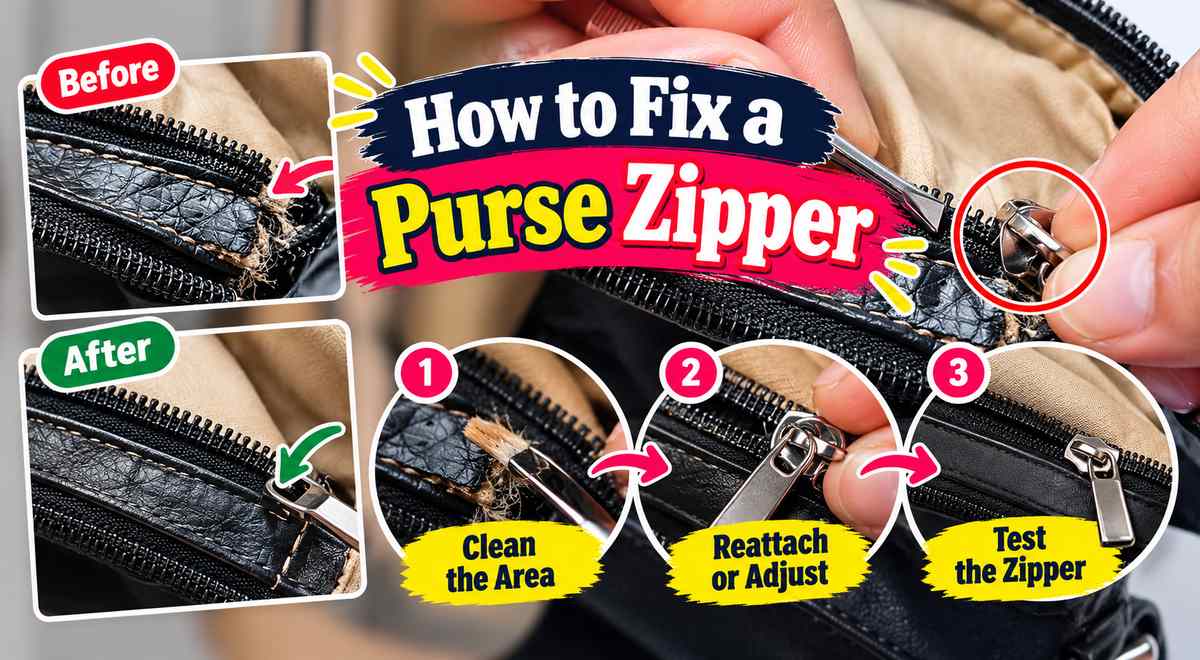
How to Fix a Purse Zipper: 4 Easy Repairs
A broken purse zipper doesn’t always mean you need a new bag. If your zipper gets stuck, separates after closing, loses its pull tab, or refuses to move, you may be able to fix it at home with a few basic tools.
The best way to repair a purse zipper depends on what’s wrong. A stuck zipper may only need cleaning, while a zipper that keeps splitting open often has a worn slider. Missing or damaged teeth can require a more extensive repair.
In this guide, you’ll learn how to fix a zipper on a purse, how to identify the cause of the problem, and when to replace the slider or the entire zipper. Each method includes practical steps, helpful precautions, and tips for avoiding further damage.
Quick Answer: How to Fix a Purse Zipper
Start by checking whether the zipper is stuck, separating, missing its pull tab, or damaged.
| Zipper problem | Best repair method |
|---|---|
| Zipper is stuck | Remove trapped fabric, clean the teeth, and try a small amount of dry lubricant |
| Zipper closes but splits open | Check for damaged teeth, then gently adjust or replace the slider |
| Zipper pull tab is broken | Attach a replacement pull tab or small zipper pull |
| Slider has come off | Reinstall a compatible slider if the zipper construction allows it |
| Teeth are missing or badly damaged | Replace the zipper or have it repaired professionally |
| Zipper tape is torn | Repair the surrounding fabric or replace the zipper, depending on the damage |
The easiest place to start: If the zipper is stuck, don’t pull harder. If it closes and then opens behind the slider, inspect the slider before replacing the entire zipper.
1. Identify What’s Wrong With Your Purse Zipper
Before trying a repair, open the purse and examine the zipper in good light. Look at the slider, the rows of teeth, the fabric tape, and the lining.
The zipper slider is the small part that moves along the teeth to open and close them. The pull tab is the piece you hold to move the slider.
These parts can fail in different ways, so identifying the problem first helps you choose the right fix.
The zipper is stuck
A stuck zipper may have a loose thread, a fold of lining, dirt, or debris caught in the teeth. It may also be difficult to move because the slider or zipper chain is damaged.
Try moving the slider backward slightly while gently freeing any trapped fabric. If the zipper remains stuck after you remove the obstruction, inspect it for bent teeth or a damaged slider.
The zipper closes but separates behind the slider
If you pull the zipper closed and it immediately opens again, the slider may no longer hold the teeth together properly.
This is a common reason people search for how to fix a zipper that splits on a purse. If the teeth are intact, a worn slider may be the main problem. If teeth are missing, bent, or detached from the tape, tightening the slider won’t solve the underlying damage.
The zipper pull tab is broken
Sometimes the zipper itself still works, but the small tab you use to pull the slider has snapped off.
If the slider is intact and still moves correctly, you can usually attach a replacement pull tab without replacing the zipper.
The slider has come off the zipper
A slider may come off when a zipper stop breaks, the zipper tape becomes damaged, or the slider is forced off the end.
Whether you can reinstall it depends on the zipper’s construction and the condition of its teeth. A purse zipper is often a continuous zipper sewn into the bag, which can make access to the slider’s end more difficult than on a jacket zipper.
The zipper teeth or tape are damaged
Look for missing teeth, bent metal teeth, broken plastic teeth, separated zipper coils, or fabric tape pulling away from the purse.
These problems need more than lubrication. A severely damaged zipper may need replacement, particularly if the surrounding material is torn or the zipper is sewn into a thick leather bag.
2. Gather Your Tools and Materials
You don’t need a full sewing kit for every purse zipper repair. Start with the basic items, then gather any additional supplies required for your specific problem.
Essential items for most small repairs:
- A pair of tweezers for removing loose threads.
- A soft brush or clean cloth for removing dirt.
- Good lighting so you can inspect the teeth.
- A small pair of pliers for certain metal-slider repairs.
- A replacement zipper pull or compatible slider, if needed.
Optional items for more involved repairs:
- A pencil with graphite for light lubrication on a suitable zipper.
- A small amount of dry, zipper-compatible lubricant.
- Hand-sewing needles and strong polyester thread.
- A seam ripper for opening stitches when replacing a sewn-in zipper.
- Replacement zipper stops or a suitable zipper repair kit.
Choose tools that fit the size of your purse zipper. Large pliers can crush a small slider, and a sharp seam ripper can cut the zipper tape or lining if used carelessly.
If your purse is made of delicate leather, suede, or coated fabric, test any cleaning or lubricating product on a hidden area first. Avoid oily products that could stain the bag.
3. How to Fix a Stuck Purse Zipper
A stuck zipper is often the simplest purse zipper problem to address. The key is to remove whatever is blocking the slider instead of forcing it through the obstruction.
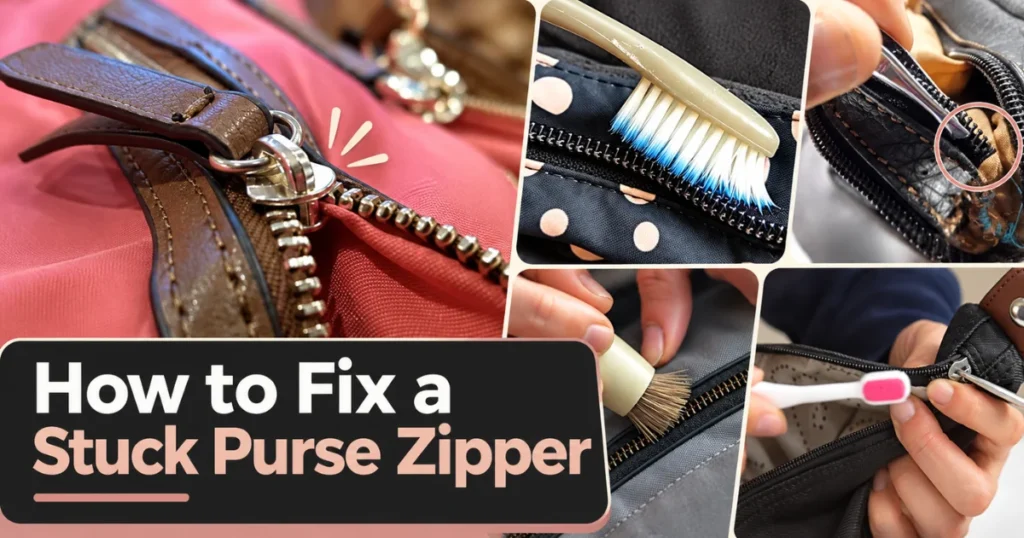
Step-by-step instructions
1. Empty the purse. Remove your belongings so the bag is easier to handle. Open the lining if it is already accessible, but don’t cut any stitches yet.
2. Inspect the zipper. Look along both sides of the slider for loose threads, folded lining, and dirt. Check whether the fabric has been pulled into the slider’s opening.
3. Free any trapped fabric. Hold the fabric gently away from the slider with your fingers or tweezers. Move the slider backward a little at a time, toward the direction it came from. Don’t tug on the lining while it is trapped.
4. Clean the zipper teeth. Use a soft, dry brush to remove dust and small particles. For stubborn surface dirt, use a slightly damp cloth only if the zipper and purse materials can safely tolerate moisture. Let the area dry before testing.
5. Apply a suitable dry lubricant if necessary. If the zipper remains stiff and the teeth are undamaged, rub a small amount of pencil graphite along the zipper teeth, where appropriate for the zipper material. Move the slider gently to distribute it. Test a hidden area first, especially on a light-colored purse.
6. Test the zipper slowly. Move the slider back and forth over the repaired section without pulling the two sides apart forcefully. If it moves smoothly, open and close the zipper several times to check its operation.
What if the zipper is still stuck?
If the slider won’t move even after the fabric is free and the teeth are clean, stop rather than forcing it.
A bent tooth, damaged slider, or separated zipper tape may be preventing movement. If the slider feels jammed in one particular spot, inspect that section closely. A damaged zipper may need a replacement slider or a new zipper.
Avoid: Pulling hard, applying excessive lubricant, or using heat to loosen the zipper. These actions can damage the teeth, stain the purse, or weaken nearby materials.
4. How to Fix a Purse Zipper That Splits Open
Best for: zippers that close but open again behind the slider.
If your purse zipper appears to close normally but the teeth separate as soon as you move the slider away, the slider may have worn out.
The slider guides both sides of the zipper together. With wear, a metal slider can spread slightly and lose its ability to engage the teeth correctly.
If the teeth are intact, you have two options: gently adjust the metal slider as a temporary repair, or replace it with a compatible slider for a more reliable fix.
Method A: Gently tighten a metal zipper slider
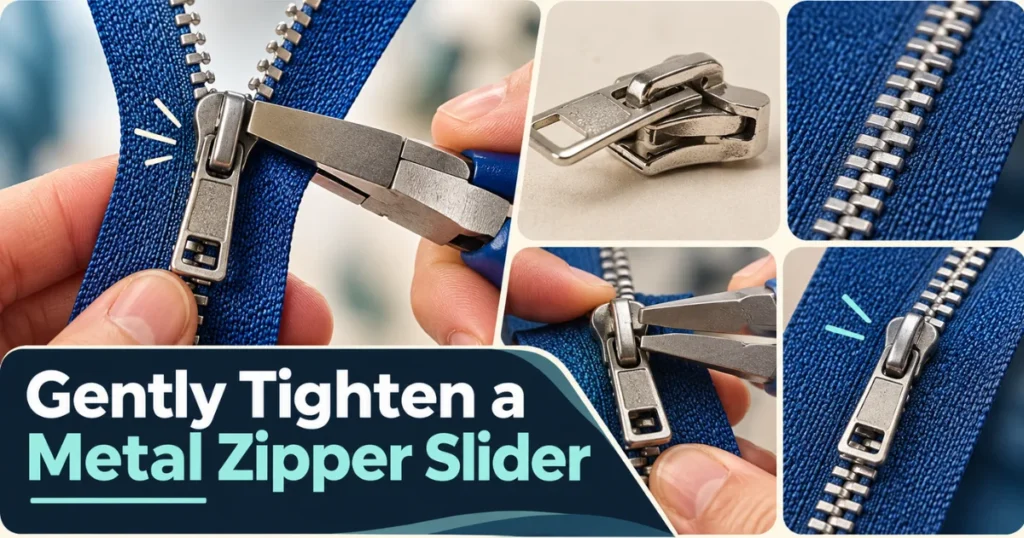
Tools needed:
- Small, smooth-jaw pliers, preferably with a narrow tip.
- Good lighting.
- A flat work surface.
Before you begin: This method is only appropriate when the slider is metal, the teeth appear intact, and the slider is visibly worn or loose. Do not use pliers to squeeze a brittle plastic slider.
Step-by-step instructions
1. Inspect the teeth. Open and close the zipper gently if possible. Check for missing teeth, bent metal teeth, broken plastic teeth, or gaps in the zipper coil. If the teeth themselves are damaged, skip this method.
2. Position the slider. Move the slider to a section where you can work comfortably without putting pressure on the zipper stops or purse fabric. If the zipper is completely jammed, don’t force it into position.
3. Identify the slider body. The slider body is the metal component that surrounds the teeth. Keep the pull tab and zipper tape away from the pliers.
4. Apply very light pressure. On a suitable slider, use the pliers to make a tiny adjustment to the appropriate opposing surfaces of the metal body. The goal is to reduce excessive looseness, not flatten or crush the slider. Slider designs vary, so don’t squeeze an unfamiliar slider blindly.
5. Test the zipper. Move the slider over the affected section. If the teeth stay together, test the full zipper with light pressure on the purse fabric.
6. Stop if the slider becomes stiff. If it no longer moves freely, you’ve likely tightened it too much or the slider is damaged. Don’t force it through the teeth.
A small adjustment can restore function temporarily, but it doesn’t reverse metal fatigue or guarantee a long-lasting repair.
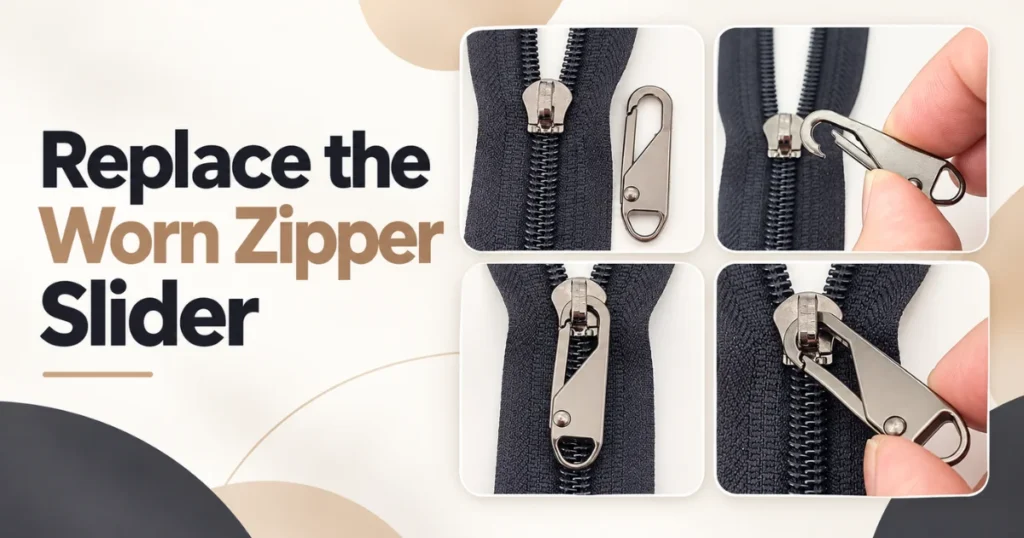
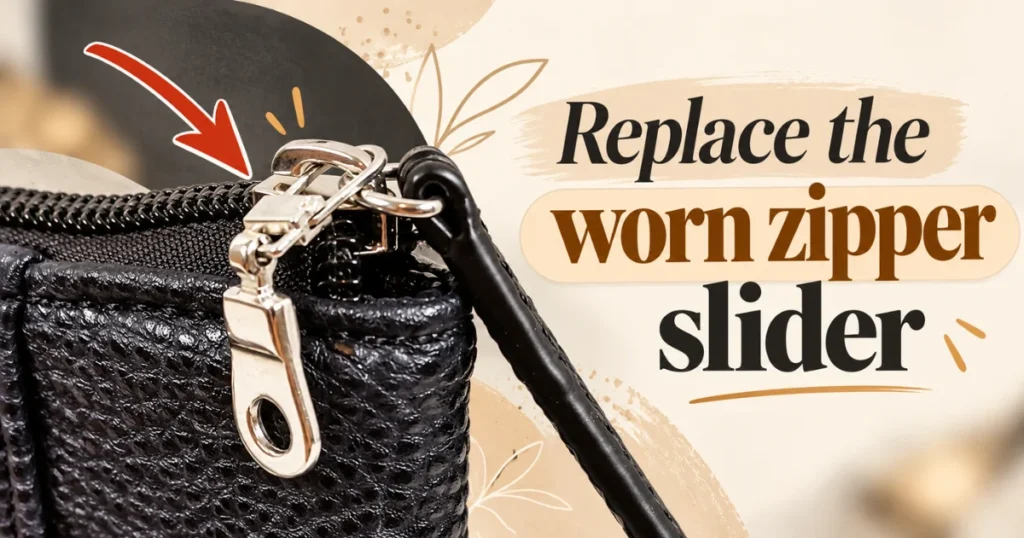
Method B: Replace the worn zipper slider
Replacing the slider is usually the better choice if the zipper continues to split after a careful adjustment, or if the slider is cracked, bent, or badly worn.
Tools and materials:
- A replacement slider that matches the zipper’s type and size.
- Small pliers suitable for removing a zipper stop.
- Tweezers, if needed.
- A compatible replacement stop or supplies for making a secure stop.
The replacement must match the zipper chain. Metal teeth, molded plastic teeth, and coil zippers can require different slider designs. A slider that looks similar may not fit or close the teeth correctly.
Step-by-step instructions
1. Identify the zipper type and slider. Examine the teeth and any markings on the old slider. If the size is unclear, take the purse or old slider to a sewing supply store or repair shop to help identify a match.
2. Find an accessible end. Look for the end of the zipper where the slider can be removed. On many purses, the zipper is sewn into the bag, and the end may be hidden inside the lining or beneath a stitched section.
3. Remove the top stop carefully. The stop prevents the slider from running off the end. If you can reach it, remove it without cutting the zipper tape. Some purse zippers require stitches to be opened first. Avoid removing a component that holds a separating zipper together unless the repair instructions specifically call for it.
4. Slide off the old slider. Once the stop is removed and the end is accessible, guide the old slider off the zipper chain. If it won’t come off easily, check whether another stop or stitched section is blocking it.
5. Fit the replacement slider. Match the new slider’s orientation to the original. Feed both sides of the zipper chain into the slider evenly, following the design of the zipper. Don’t twist the tape or force the teeth into the opening.
6. Secure the zipper end. Reinstall a compatible stop or have a suitable stop fitted. If the original stop was removed, don’t leave the end unprotected, as the slider could come off again.
7. Test before finishing. Move the slider slowly along the full zipper several times. Check that the teeth engage evenly, the slider doesn’t jam, and the zipper stays closed behind it. Reclose any lining stitches only after the zipper works correctly.
Important: Replacing a slider can be a straightforward repair when the zipper end is accessible. If the zipper is stitched deeply into a leather purse, has damaged tape, or requires extensive lining removal, a bag repair specialist may be the safer option.
5. How to Fix a Broken Zipper on a Purse When the Pull Tab Is Missing
If the little handle has broken off but the zipper still opens and closes, you may not need to replace the slider at all.
A replacement zipper pull is usually the easiest fix. You can also use a small split ring or a purpose-made zipper pull attachment if it fits securely through the slider’s attachment hole.
Tools and materials
- A replacement zipper pull, small split ring, or suitable zipper pull attachment.
- Small pliers, if the attachment requires them.
- A cloth to protect the purse surface while you work.
Step-by-step instructions
1. Check the slider. Make sure the slider body is intact and can move along the zipper. If the slider is cracked or the teeth won’t stay closed, replacing the pull tab alone won’t fix the problem.
2. Inspect the attachment hole. Look at the small opening where the original pull tab was attached. If the metal around it is cracked or bent, replace the slider instead of attaching a new pull to a weakened part.
3. Choose a suitable replacement. Select a pull that fits through the attachment hole and is strong enough for normal use. A small metal ring may work if it closes securely and doesn’t have sharp edges.
4. Attach the new pull. Thread the replacement through the attachment hole. If it uses a small clasp, close the clasp securely without bending the slider.
5. Test the zipper. Move the slider slowly in both directions. Check that the new pull doesn’t catch on the purse lining or slip out of its attachment point.
Can you use a paper clip as a temporary zipper pull?
A small paper clip may work briefly in an emergency, provided it fits securely and has no sharp ends exposed. However, it can bend, snag the lining, or come loose.
For everyday use, a purpose-made zipper pull or a properly secured small ring is a better option.
6. How to Fix a Purse Zipper That Has Come Off the Track
A zipper that has come off the track may be repairable if the teeth and tape are still in good condition. However, purse zippers vary in construction, and some cannot be rethreaded without opening the sewn-in end.
Step-by-step instructions
1. Inspect both sides of the zipper. Check that the teeth or coils are intact and that the tape hasn’t torn away from the purse.
2. Find out why the slider came off. Look for a missing stop, damaged slider, or torn tape. If the slider has broken or the tape has split, fix that problem before trying to reinstall it.
3. Check whether the end is accessible. If the zipper has an accessible open end and its construction permits rethreading, you may be able to fit the slider back onto the chain. If the zipper is sewn into a closed loop, you may need to open a small section of stitching to access the end.
4. Align the zipper sides. Make sure both sides of the chain are oriented correctly. Feed them into the slider evenly, following the zipper’s original arrangement.
5. Move the slider slowly. Guide it a short distance along the zipper to see whether the teeth or coils engage correctly. Stop if one side slips out or the teeth refuse to mesh.
6. Restore the zipper stop. If the stop was missing or removed, install a compatible replacement. If you had to open the purse lining, secure the stitching only after the zipper works correctly.
7. Test the full zipper. Open and close it several times without pulling hard on the fabric.
If you can’t get both sides to align, don’t keep forcing the slider onto the chain. A wrong slider orientation, damaged teeth, or stretched tape may be the reason it won’t engage.
7. When Should You Replace the Entire Purse Zipper?
Not every broken zipper can be fixed by adjusting the slider. Sometimes, replacing the whole zipper is the most practical solution.
Consider a full zipper replacement if:
- Several teeth are missing, cracked, or badly bent.
- The zipper coil is torn or separated from the tape.
- The zipper tape has ripped away from the purse.
- The slider continues to jam because the chain is damaged.
- A replacement slider doesn’t close the zipper correctly.
- The zipper has extensive corrosion or other damage that affects its operation.
Can you replace a purse zipper at home?
Yes, if you have sewing skills and the zipper is reasonably accessible. However, a purse zipper is often sewn between the outer material and the lining, so replacing it can involve more work than changing a zipper on a simple fabric pouch.
For a basic fabric purse, the repair generally involves opening the relevant lining stitches, removing the old zipper, fitting a compatible replacement, sewing the new zipper in place, and closing the lining.
Leather, suede, structured handbags, and purses with thick reinforced seams can be more difficult. A bag repair specialist or experienced tailor may be a better choice if you want to preserve the original appearance.
How to tell if a replacement is worth it
| Condition | Recommended action |
|---|---|
| Slider is worn, teeth are intact | Try a compatible replacement slider |
| Pull tab is missing, slider works | Replace the pull tab only |
| One small area is stuck | Clean and inspect before replacing parts |
| Teeth are damaged in several places | Consider replacing the zipper |
| Tape is torn near a high-stress area | Seek a repair assessment |
| Expensive or delicate handbag | Consider professional repair before disassembly |
The main rule is simple: replace only the part that’s damaged when the rest of the zipper is in good condition. But don’t spend time adjusting a slider if the teeth or tape are already beyond repair.
8. Troubleshooting Common Purse Zipper Problems
Even after choosing the right repair, a zipper may not work as expected. Use this guide to identify what went wrong and what to try next.
| Problem after repair | Likely cause | What to do |
|---|---|---|
| Zipper still splits open | Slider is worn or teeth are damaged | Reinspect the teeth and replace the slider if needed |
| Slider is too tight to move | Slider was squeezed too much or the teeth are misaligned | Stop forcing it and inspect the slider for damage |
| Zipper catches the lining | Loose fabric or thread is entering the slider | Ease the slider backward and free the fabric |
| New slider won’t fit | Wrong slider type, size, or orientation | Match the replacement to the zipper chain |
| Slider comes off again | Zipper stop is missing or insecure | Fit a compatible stop before further use |
| Zipper works when empty but splits when the purse is full | Excessive tension or a weakened zipper | Reduce the load and inspect the zipper tape and stitching |
| Pull tab keeps coming loose | Attachment is insecure or the slider’s attachment point is damaged | Fit a more secure pull or replace the slider |
What if the zipper works when the purse is empty but fails when it’s full?
This often points to tension rather than a simple sticking problem. A tightly packed purse can pull the two sides of the zipper apart, particularly if the zipper tape or stitching is worn.
Remove some items and close the zipper again. If it works when the purse is less full, avoid overpacking it and inspect the zipper’s attachment to the bag.
If the zipper continues to separate under light tension, a worn slider, damaged teeth, or stretched tape may need repair.
What if the zipper still splits after tightening the slider?
Don’t keep squeezing it. Excessive pressure can deform the slider and make it jam.
Inspect the teeth again. If they are intact, try a correctly matched replacement slider. If the replacement still fails, the zipper chain or tape may be damaged, and a full zipper replacement may be necessary.
What if the new slider won’t move smoothly?
Check that both sides of the zipper chain enter the slider evenly. Confirm that the replacement matches the zipper type and is fitted in the correct direction.
If the teeth are misaligned, remove the slider only if you can do so safely and correct the alignment. Don’t force a slider that appears too small or catches repeatedly.
What if the zipper is stuck in thick purse fabric?
Look carefully for folded lining, thick seam allowances, or loose threads around the slider. Gently ease the trapped material away while moving the slider backward.
If the slider is caught inside a bulky seam or the outer material is being pulled into the mechanism, a bag repair specialist may be able to free it without damaging the purse.
9. How to Keep Your Purse Zipper Working
A few simple habits can help prevent another zipper problem.
- Don’t overfill the purse. Leave enough room for the zipper to close without pulling the sides apart.
- Keep the zipper clean. Brush away dust and lint before they build up around the teeth.
- Pull in line with the zipper. Avoid yanking the pull sideways or at a sharp angle.
- Keep the lining clear. Check that loose fabric and threads aren’t entering the slider.
- Don’t force a jammed zipper. Stop and inspect it before the teeth or tape become damaged.
- Use suitable lubricants sparingly. Choose a product compatible with the zipper and purse material. Avoid oily products that may stain fabric or leather.
- Check the zipper periodically. If the slider starts separating the teeth or becomes difficult to move, address the problem before it gets worse.
If you store a purse for a long time, keep it in a shape that doesn’t place unnecessary pressure on the zipper. Avoid storing it tightly packed or with the zipper under tension.
Frequently Asked Questions
1. How do you fix a zipper on a purse that won’t close?
Check for trapped lining, dirty teeth, and damaged parts. If the teeth are intact but separate behind the slider, the slider may be worn and need careful adjustment or replacement.
2. How do you fix a broken zipper on a purse without replacing it?
If the problem is a missing pull tab, attach a replacement pull. If the zipper is stuck, remove any trapped fabric and clean the teeth. A worn slider may also be replaceable without changing the entire zipper.
3. Can you fix a purse zipper that keeps splitting open?
Yes, if the teeth and zipper tape are still in good condition. A worn metal slider may respond to a very small adjustment, but replacing it with a compatible slider is usually the better repair if the problem returns.
4. Can you use a pencil to fix a stuck purse zipper?
Graphite from a pencil can help lubricate some stiff zippers. Apply it sparingly to the teeth, test the material first, and avoid leaving graphite marks on light-colored or delicate purse fabrics.
5. When should you take a purse zipper to a repair shop?
Seek professional help if the teeth are badly damaged, the zipper tape is torn, the purse is made of delicate leather, or replacing the zipper requires extensive disassembly. A repair specialist can assess whether the zipper or surrounding material needs replacement.
