
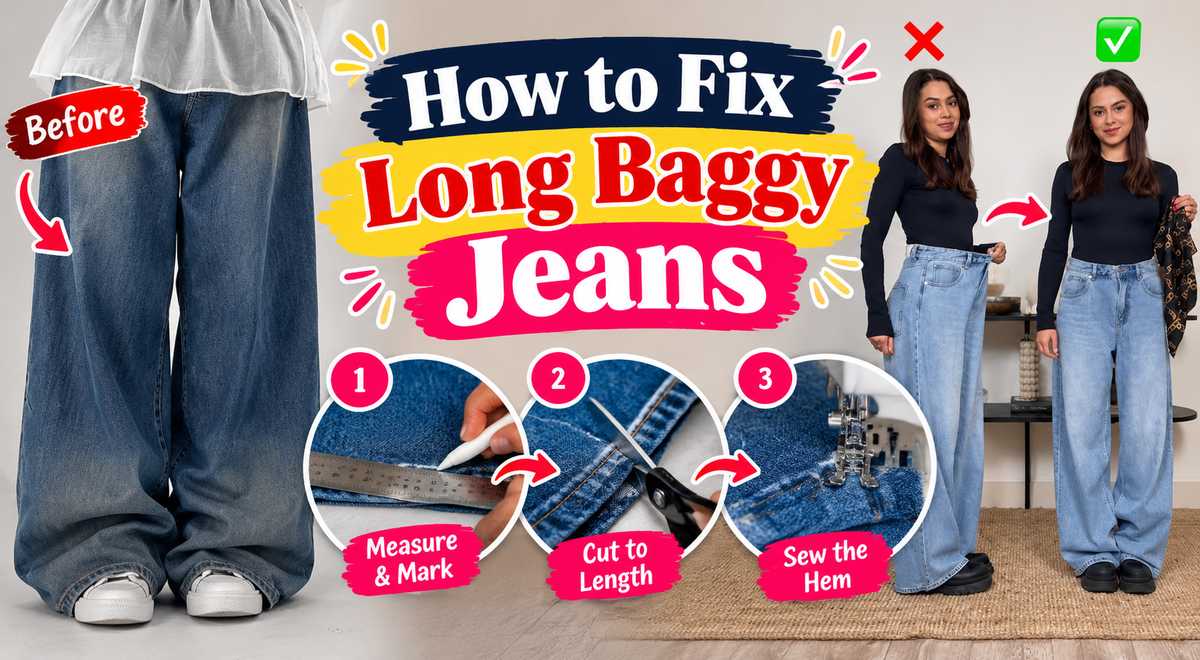
How to Fix Long Baggy Jeans: 4 Easy DIY Methods
Baggy jeans look great, but extra length can make the hems drag on the ground, bunch around your shoes, or wear out at the bottom. The good news is that you can fix long baggy jeans at home without changing their relaxed fit.
The easiest solution is to shorten the jeans to your preferred length. If you want to keep the original faded hem, use a method that hides the extra fabric inside the leg. If your jeans are much too long or have wide, flared legs, a regular hem may give you a cleaner result.
This guide explains how to fix baggy jeans that are too long, with simple steps for beginners, a no-sew option, and practical tips to help you avoid uneven hems.
Quick Answer: How to Fix Long Baggy Jeans
The best way to fix long baggy jeans is to measure the length you want, pin the excess fabric, and shorten the hems.
- Fastest temporary fix: Fold the hems inward or make a neat cuff.
- Best for keeping the original hem: Use the original-hem alteration method.
- Best for very long jeans: Sew a new hem after trimming the excess fabric.
- Best without a sewing machine: Use hand stitching or suitable iron-on hemming tape.
For most baggy jeans, I recommend a sewn hem for a durable everyday finish. It holds the new length more securely than a simple fold and helps prevent the fabric from dragging on the ground.
Why Are Your Baggy Jeans Too Long?
Before you start, check how much length you need to remove and how the jeans fit around your legs. The right method depends on the problem.
| Problem | Best solution |
|---|---|
| Hems drag on the ground | Shorten the jeans |
| Fabric bunches over your shoes | Adjust the finished length |
| You want to keep the faded factory hem | Use the original-hem method |
| Jeans are several inches too long | Sew a new hem |
| You need a quick, temporary fix | Fold or cuff the hems |
| Jeans have wide, flared legs | Use a regular hem to preserve the leg shape |
If the jeans fit well at the waist, hips, and thighs, you don’t need to change those areas. Focus on the length so you can keep the relaxed baggy look.
Tools and Materials You’ll Need
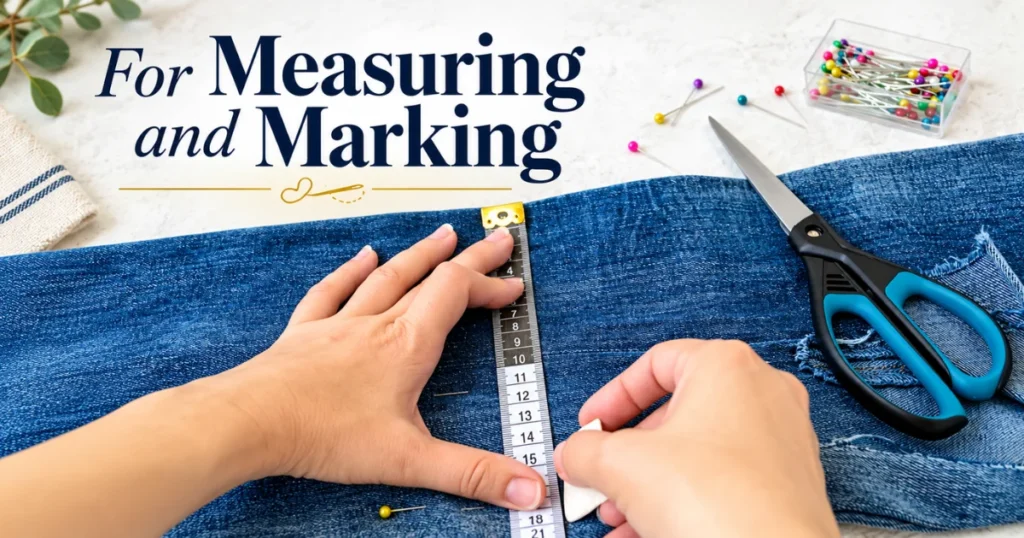
For measuring and marking
- Measuring tape or seam gauge
- Tailor’s chalk or washable fabric marker
- Sewing pins or fabric clips
- Full-length mirror
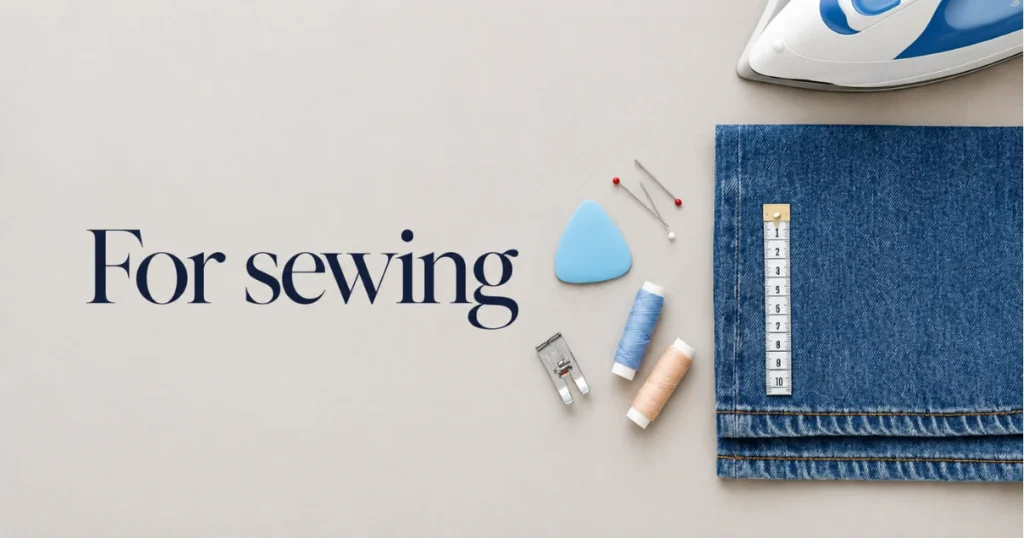
For sewing
- Sharp fabric scissors
- Matching polyester thread
- Denim sewing-machine needle
- Sewing machine or hand-sewing needle
- Iron and ironing board
Optional: Iron-on hemming tape can help if you don’t sew. Choose a product labeled for denim or heavy fabric and follow its temperature and application instructions.
Method 1: Fold the Jeans for a Quick Fix
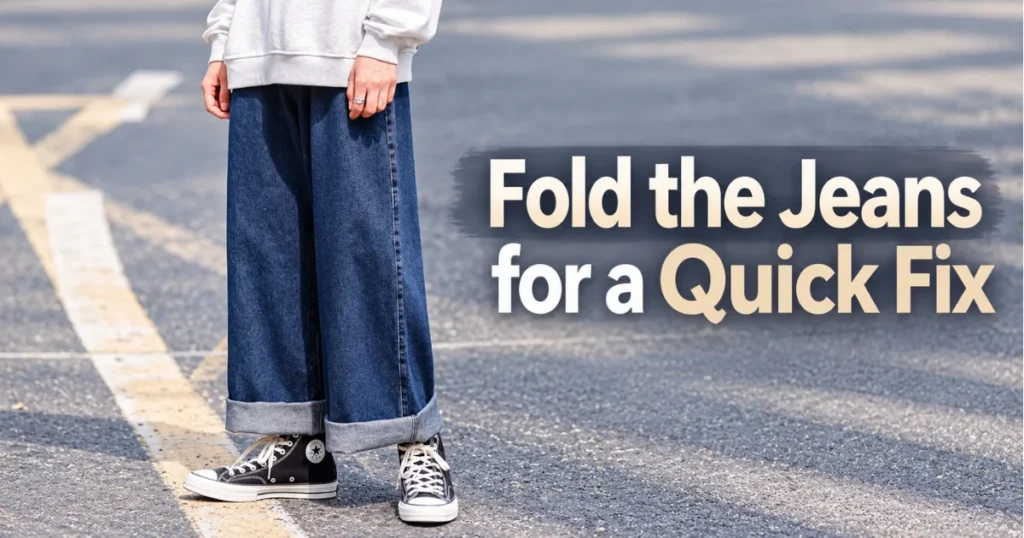
Step-by-step instructions
- Put on your jeans. Wear the shoes you plan to pair with them so you can judge the length accurately.
- Fold the bottom edge inward. Turn the excess denim toward the inside of each leg until the hems sit at your preferred height.
- Check both legs. Stand straight and look at the jeans from the front and side. Adjust the folds if one leg looks longer.
- Secure the fold if needed. Use a small safety pin on the inside, keeping the sharp point away from your skin. You can also use fabric tape designed for temporary clothing alterations.
- Walk around. Check that the folds stay in place and don’t create uncomfortable lumps inside your shoes.
Expected result: A quick, reversible fix that preserves the original jeans. The folds may loosen during walking or washing, so this isn’t the best choice for a long-term alteration.
Method 2: Shorten Baggy Jeans and Keep the Original Hem
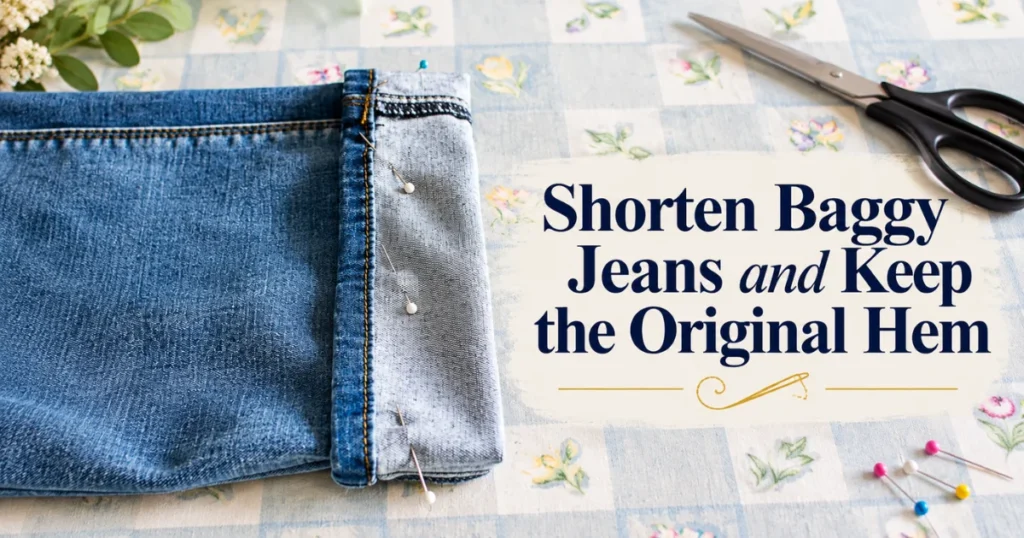
If you like the worn, faded edge at the bottom of your jeans, you can shorten them without cutting away the factory hem. This technique is often called an original-hem alteration.
The method works best for moderate length adjustments on straight or relaxed legs. It can create a bulky fold when you remove too much length, and it may distort tapered or flared legs. Singer’s sewing guide explains the same basic approach for retaining the original hem.
Step-by-step instructions
- Wash and dry the jeans first: Follow the care label, especially if the denim is new and may shrink.
- Mark the new length: Put on the jeans with your usual shoes. Fold the hems up to the desired height and secure them with pins.
- Measure the amount to remove: Take off the jeans and measure the distance between the existing hem and the fold. Record the measurement for each leg.
- Prepare the fold: Turn the jeans right side out. Following the original-hem method, position the fold so the factory hem reaches the new finished length. Use the existing hem’s stitching line and depth to guide the placement, rather than guessing.
- Match the side seams: Pin or clip around the leg, making sure the inseam and outer seam line up. Check that the fold is level and the leg hasn’t twisted.
- Sew beside the original hem: Use matching thread and a suitable denim needle. A zipper foot can help you stitch close to the thick original hem. Sew slowly through bulky areas.
- Finish the inside: Try the jeans on again. If the fit looks right, finish the raw edge of the tucked fabric with a suitable overedge or zigzag stitch before trimming excess fabric, if needed.
- Press the alteration: Use an iron at a temperature suitable for the fabric. Press the folded section upward toward the knee and the original hem back down.
Important measuring tip
The original-hem method involves extra folds, so the final length depends on how the existing hem is positioned. Test the fold and pin it before sewing. If the jeans need to be shortened by several inches, a standard hem may produce a less bulky result.
Expected result: The jeans keep their original bottom edge and stitching. A small alteration seam remains inside the leg, and the folded fabric adds some bulk.
Method 3: Sew a New Hem for Very Long Baggy Jeans
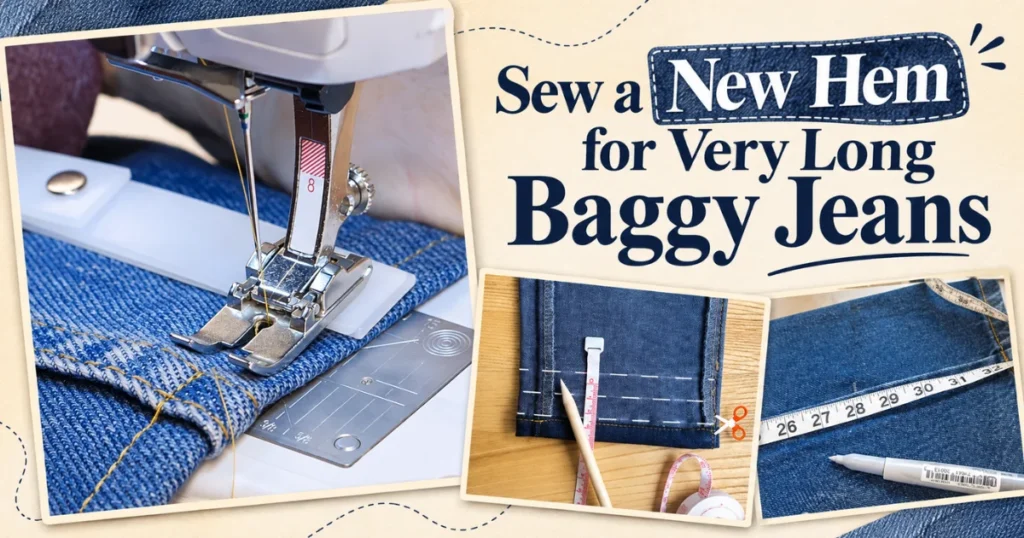
For jeans that are much too long, a regular sewn hem is often the most practical option. You remove the extra length and create a new finished edge. This method also works well for wide-leg and flared jeans because you can preserve their intended leg shape.
Step 1: Find the correct length
Put on the jeans with the shoes you normally wear. Fold the hems up until the jeans hang the way you want.
For a full-length baggy style, you may prefer a slight break over your shoes. For a cleaner look, you can choose a length that sits just above the floor without dragging.
Pin the fold and walk a few steps. Sit down and stand again to check the length before removing the jeans.
Step 2: Measure and mark both legs
Take off the jeans and measure the amount folded up on each leg.
Turn the jeans inside out and mark the finished fold line with tailor’s chalk. Use a seam gauge to measure around the leg so the line stays even.
Don’t assume both legs are identical. Compare the marks and check the jeans while laid flat.
Step 3: Add a hem allowance
You need extra fabric below the finished line so you can fold and sew the raw edge.
For a simple double-fold hem, you can use a half-inch first fold and a second fold of about three-quarters of an inch, provided the leg shape and fabric allow it. This creates an enclosed raw edge.
Measure the allowance below your finished-length line and mark the cutting line. Do not cut along the finished-length line itself.
Step 4: Cut the excess denim
Before cutting, put the jeans on one more time and confirm the marked length. Once you remove fabric, you can’t restore the original length without adding material.
Lay each leg flat and cut carefully along the cutting line. Keep the fabric smooth so the cut remains even around the leg.
Step 5: Fold and press the new hem
Turn the raw edge inward by the first fold amount and press it. Fold it inward again to enclose the raw edge.
Pin or clip the fold in place. Check that the hem is the same depth all the way around and that the side seams stay aligned.
Step 6: Sew the hem
Use a denim needle suitable for your fabric weight and thread that matches the jeans. A size 90/14 needle is a reasonable starting point for standard denim; heavier denim may need a larger needle, depending on the sewing machine and its instructions.
Sew a straight line around the leg near the folded edge. Keep the fabric flat without pulling or stretching it. Remove pins before the needle reaches them.
When you approach thick side seams, slow down. A folded scrap of denim or a sewing-machine hump jumper can help keep the presser foot level over bulky areas. Stop if the needle struggles instead of forcing the machine through the fabric.
Step 7: Press and check the result
Press the new hem flat. Turn the jeans right side out and try them on with your usual shoes.
Check the front, sides, and back. If the hems look uneven, identify where the difference begins before making further changes.
Expected result: A durable, neat hem with a clean bottom edge. The factory hem and its original fading will be lost, but the jeans can keep their relaxed shape when the new length is marked correctly.
Method 4: Fix Long Baggy Jeans Without a Sewing Machine
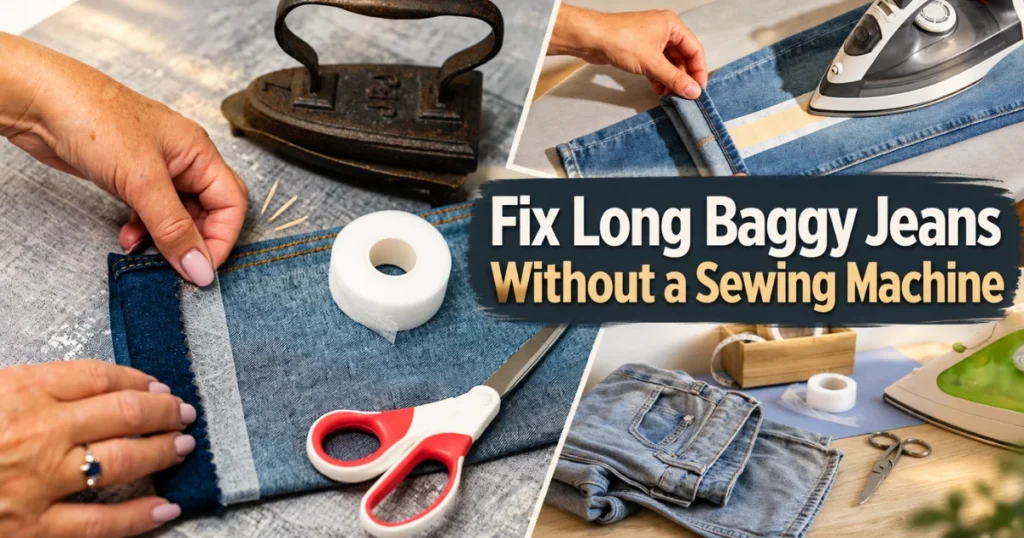
You can shorten jeans without a sewing machine, but the best method depends on whether you want a temporary fix or a finished alteration.
Option A: Use iron-on hemming tape
You’ll need: Hemming tape rated for denim or heavy fabric, an iron, a measuring tape, pins, and scissors.
- Put on the jeans and pin the desired length.
- Take them off and mark the finished line and cutting allowance.
- Cut the excess fabric only after checking the measurements twice.
- Fold the hem inward according to the tape manufacturer’s instructions.
- Position the tape inside the fold and apply the iron using the specified heat, pressure, and timing.
- Let the hem cool completely before checking the bond.
Hemming tape can be convenient, but it may not hold as well as stitching on thick, frequently washed denim. Test it on a hidden area if the product instructions allow it, and avoid using it if the fabric care label conflicts with the required heat.
Option B: Sew the hem by hand
If you have a needle and strong thread, you can make a sewn hem without a machine.
- Measure, mark, and fold the jeans as described in Method 3.
- Use pins or clips to hold the folded fabric.
- Thread a sturdy hand-sewing needle with matching thread.
- Sew small, even backstitches around the hem. A backstitch is a hand stitch that overlaps the previous stitch for a stronger seam.
- Secure the thread at the end and press the hem flat.
Hand sewing takes longer, especially through thick side seams, but it can create a durable finish when the stitches are secure.
Common Mistakes When Fixing Long Baggy Jeans
| Mistake | How to avoid it |
|---|---|
| Cutting before checking the length | Pin the jeans first and try them on with your usual shoes. |
| Making one leg shorter | Measure both legs and compare them before cutting. |
| Losing the baggy shape | Adjust the length without taking in the leg width unnecessarily. |
| Creating a bulky original-hem tuck | Choose a regular hem when the shortening amount is large. |
| Getting puckered stitching | Avoid stretching the denim and check the machine tension if needed. |
| Breaking a needle at thick seams | Use a suitable denim needle and sew slowly over bulky areas. |
| Sewing the leg opening shut | Keep the pant leg positioned around the machine’s free arm so only the hem layers sit under the needle. |
| Using unsuitable hemming tape | Check fabric compatibility and follow the product’s application instructions. |
Troubleshooting: What If the Hem Looks Wrong?
One leg is longer than the other: Put the jeans on and identify which hem is incorrect. If you haven’t cut the fabric, remove the pins and adjust the fold. If you’ve already sewn the hem, unpick the stitches carefully and remeasure before sewing again.
The jeans still drag on the floor: Check the length while wearing your usual shoes. If the hems remain too long, mark a little more fabric to remove and repeat the fitting process. Avoid cutting more until you’re sure the new length is correct.
The hem looks wavy or puckered: The fabric may have stretched while sewing, or the machine settings may not suit the denim. Unpick the affected section if needed, press the fabric flat, and test the stitch on a folded scrap before continuing.
The leg opening looks wider or narrower than before: A regular hem generally preserves the leg opening better than an original-hem tuck on flared or strongly tapered jeans. If the opening has changed noticeably, the alteration may need to be reshaped along the lower leg rather than simply shortened.
You cut the jeans too short: Stop cutting. A shorter hem cannot be lengthened by folding the original fabric back out if you have already removed too much. Depending on the amount missing, you may need a contrasting denim extension, a decorative hem treatment, or professional alteration.
Which Method Should You Choose?

For a quick fix
Fold the hems inward. This is best for temporary wear and lets you test the length before cutting.
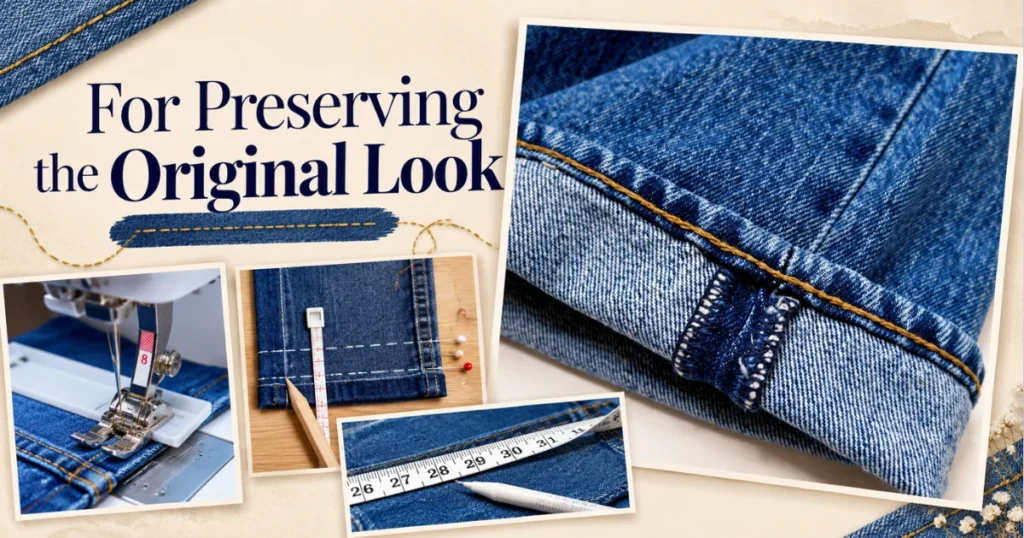
For preserving the original look
Use the original-hem method when the adjustment is moderate and the leg shape suits the technique.

For a long-term alteration
Sew a new hem if the jeans are much too long, the old hem is damaged, or the leg is flared.
Frequently Asked Questions
1. How do you fix long baggy jeans without cutting them?
Fold the excess length inward or create a cuff at the bottom of each leg. These options are reversible, but they may loosen during wear.
2. How do you fix baggy jeans that are too long while keeping the original hem?
Use the original-hem alteration method. Fold the excess fabric into a tuck, stitch close to the factory hem, and finish the inside so the original edge sits at the new length.
3. Can you shorten baggy jeans without a sewing machine?
Yes. You can sew the hem by hand or use compatible iron-on hemming tape. Hand stitching is generally a better choice when you want a sewn finish without a machine.
4. How much length should you remove from baggy jeans?
Remove only the amount needed to reach your preferred finished length. Measure while wearing the shoes you plan to use with the jeans, and check both legs before cutting.
5. Can you fix long baggy jeans that have already been cut too short?
Sometimes. You may be able to add a strip of denim or use a decorative extension, but the result depends on how much length is missing and how the new fabric matches the original jeans.
